Publications news

Hot topic on the Blue Journal

screenshot-2026-05-14-at-18-18-40

14

May 26


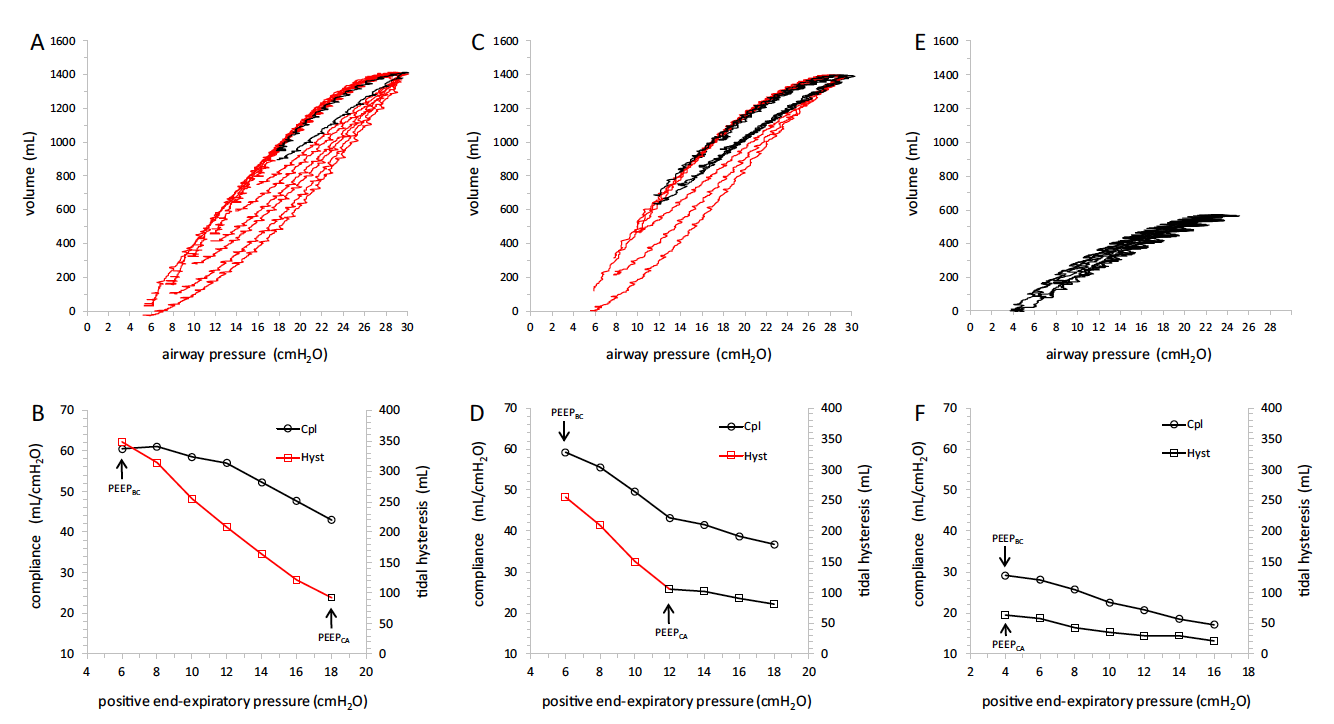
How to use PEEP-to-plateau curves to detect recruitment / derecruitment in ICU? Don't miss this hot topic on the Blue Journal! This external validation study confirms the use the cut off value of the 100ml (or 1.4 ml/kg of PBD) of tidal hysteresis for the detection at the bedside of intra-tidal recruitment - a major determinant of ventilator-induced lung injury - and allows fine tuning of PEEP setting in daily life.   ---  

Validation of thresholds for tidal lung hysteresis to detect tidal recruitment/derecruitment in patients with acute respiratory distress syndrome

Francesco Mojoli et al.

Extract

"To the Editor

During a decremental positive end-expiratory pressure (PEEP) ­trial, insufficient PEEP may lead to expiratory lung collapse followed by inspiratory reopening (tidal recruitment/derecruitment), an injurious mechanism that may misleadingly increase measured respiratory system compliance (Crs), ultimately resulting in setting a PEEP level that does not prevent alveolar instability.1-3 A combined assessment of Crs and tidal hysteresis improves interpretation of the trial, because tidal recruitment/derecruitment is indicated by a large increase in hysteresis following PEEP reduction.1,4 In a previous post hoc analysis among patients with COVID-19 acute respiratory distress syndrome (ARDS), an absolute hysteresis threshold (≥100 mL) predicted tidal recruitment/derecruitment without requiring comparison between different PEEP levels.1 We performed an external validation of this threshold to detect alveolar instability using a single assessment of hysteresis, independently of a PEEP trial. In addition, we sought to identify a cutoff for hysteresis normalized to the patient’s predicted body weight (PBW)."

From The Blue Journal

Upcoming issue on Current Opinion in Critical Care!

screenshot-2026-04-14-at-12-24-28

14

Apr 26


Don't miss this review dedicated to non invasive respiratory monitoring - signed by Dr. Mongodi, Dr. Mojoli and Pr. Suarez-Sipmann - on the upcoming special issue dedicated to cardio-pulmonary monitoring of Current Opinion in Critical Care Find there all the details for everyday use in your clinical practice of lung ultrasound, tidal hysteresis, EIT, CO2 kynetics and muscle ultrasound to optimise the management of patients affected by acute respiratory failure.   From Current Opinion in Critical Care

ABSTRACT

Purpose of review

Acute respiratory failure is a frequent cause of ICU admission and carries a high mortality rate. Multimodal respiratory monitoring integrating imaging techniques, respiratory mechanics and functional data provides a more comprehensive physiologically grounded assessment of the respiratory status. This review describes recent advances in noninvasive bedside monitoring options that when combined could enable a safer, more personalized management of patients on invasive mechanical ventilation.

Recent findings

Quantitative lung ultrasound can be reliably used at the bedside to quantify and monitor the lung density and guide the ventilatory strategy; a recent expert consensus has defined its technical and clinical applications. While providing information on lung morphology, it needs to be combined with other bedside tools such as tidal hysteresis in pressure–volume loops and/or EIT to individualize ventilatory settings. Muscle ultrasound assessment is used to monitor active patients, mainly to quantify patient effort and predict weaning outcomes. Expired CO2 kinetics evaluates lung efficiency, with important prognostic implications, and new promising developments may allow to continuously estimate static lung volume and cardiac output.

Summary

Multiple noninvasive bedside tools are available for a multimodal assessment of the respiratory system; while each evaluates the patient from a different perspective, their effectiveness is maximized when they are integrated and combined for daily monitoring and clinical assessment. From an international collaboration between The GRIP - Group for Respiratory Intensive care Progress in Pavia, Novara and Madrid

Early lung ultrasound score changes predict the failure of non-invasive respiratory supports in acute hypoxemic patients: a multicenter prospective observational study

screenshot-2026-02-15-at-16-59-49

5

Mar 26


Recently published on Critical Care - This multicenterperspective international study based in Novara, Pavia and Dijon shows how no improvement in lung aeration as measured by the lung ultrasound aeration score after 2 hours of non-invasive respiratory support is an independent predictor of need of escalation. Authors: Silvia Mongodi, Erminio Santangelo, Domenico Luca Grieco, Valeria Musella, Nello De Vita, Rosanna Vaschetto, Bélaïd Bouhemad, Francesco Mojoli Click here for the free full text!

Setting positive end-expiratory pressure: using the pressure-volume curve

18

Dec 23


Have a look to this brand new review to improve your use of pressure-volume curves to set PEEP in ICU patients - on Current Opinion in Critical Care

Setting positive end-expiratory pressure: using the pressure-volume curve

Francesco Mojoli 1 2Marco Pozzi 2Eric Arisi 2

Abstract

Purpose of review: To discuss the role of pressure-volume curve (PV curve) in exploring elastic properties of the respiratory system and setting mechanical ventilator to reduce ventilator-induced lung injury. Recent findings: Nowadays, quasi-static PV curves and loops can be easily obtained and analyzed at the bedside without disconnection of the patient from the ventilator. It is shown that this tool can provide useful information to optimize ventilator setting. For example, PV curves can assess for patient's individual potential for lung recruitability and also evaluate the risk for lung injury of the ongoing mechanical ventilation setting. Summary: In conclusion, PV curve is an easily available bedside tool: its correct interpretation can be extremely valuable to enlighten potential for lung recruitability and select a high or low positive end-expiratory pressure (PEEP) strategy. Furthermore, recent studies have shown that PV curve can play a significant role in PEEP and driving pressure fine tuning: clinical studies are needed to prove whether this technique will improve outcome.

Dynamic NLR and PLR in Predicting COVID-19 Severity: A Retrospective Cohort Study

30

Aug 23


Infectious Diseases and Therapy volume 12, pages 1625–1640 (2023)   Erika Asperges, Giuseppe Albi, Valentina Zuccaro, Margherita Sambo, Teresa C. Pieri, Matteo Calia, Marta Colaneri, Laura Maiocchi, Federica Melazzini, Angioletta Lasagna, Andrea Peri, Francesco Mojoli, Paolo Sacchi & Raffaele Bruno  

Abstract

Introduction

The hyperinflammation phase of severe SARS-CoV-2 is characterised by complete blood count alterations. In this context, the neutrophil-to-lymphocyte ratio (NLR) and the platelet-to-lymphocyte ratio (PLR) can be used as prognostic factors. We studied NLR and PLR trends at different timepoints and computed optimal cutoffs to predict four outcomes: use of continuous positive airways pressure (CPAP), intensive care unit (ICU) admission, invasive ventilation and death.

Methods

We retrospectively included all adult patients with severe acute respiratory syndrome coronavirus 2 (SARS-CoV-2) pneumonia admitted from 23 January 2020 to 18 May 2021. Analyses included non-parametric tests to study the ability of NLR and PLR to distinguish the patients’ outcomes at each timepoint. Receiver operating characteristic (ROC) curves were built for NLR and PLR at each timepoint (minus discharge) to identify cutoffs to distinguish severe and non-severe disease. Their statistical significance was assessed with the chi-square test. Collection of data under the SMACORE database was approved with protocol number 20200046877.

Results

We included 2169 patients. NLR and PLR were higher in severe coronavirus disease 2019 (COVID-19). Both ratios were able to distinguish the outcomes at each timepoint. For NLR, the areas under the receiver operating characteristic curve (AUROC) ranged between 0.59 and 0.81, and for PLR between 0.53 and 0.67. From each ROC curve we computed an optimal cutoff value.

Conclusion

NLR and PLR cutoffs are able to distinguish severity grades and mortality at different timepoints during the course of disease, and, as such, they allow a tailored approach. Future prospects include validating our cutoffs in a prospective cohort and comparing their performance against other COVID-19 scores.
  Open Access full text here

The mental health toll of COVID-19: significant increase in admissions to ICU for voluntary self-inflicted injuries after the beginning of the pandemic

31

Jul 23


Int J Ment Health Syst. 2023 Jul 15;17(1):22. doi: 10.1186/s13033-023-00590-x. Silvia Mongodi, Giulia Salve, Marta Ravasi, Damiano Rizzi, Matteo Mangiagalli, Valeria Musella, Catherine Klersy, Luca Ansaloni, Francesco Mojoli

Abstract

Background: COVID-19 outbreak deeply impacted on mental health, with high rate of psychological distress in healthcare professionals, patients and general population. Current literature on trauma showed no increase in ICU admissions for deliberate self-inflicted injuries in the first weeks after the beginning of COVID-19. Objectives: We tested the hypothesis that self-inflicted injuries/harms of any method requiring ICU admission increased in the year following COVID-19 outbreak. Methods: Retrospective cohort single-center study comparing admissions to ICU the year before and the year after the pandemic start. All patients admitted to polyvalent ICUs-Fondazione IRCCS Policlinico S. Matteo, Pavia, Italy from February 21st, 2019 to February 21st, 2020 (pre-COVID) and from February 22nd, 2020 to February 22nd, 2021 (post-COVID) were enrolled. Results: We enrolled 1038 pre-COVID and 854 post-COVID patients. In post-COVID, the incidence of self-inflicted injuries was 32/854 (3.8% [2.5-5.1]), higher than in pre-COVID (23/1038, 2.2%-p = 0.0014-relative increase 72.7%). The increase was more relevant when excluding COVID-19 patients (suicide attempts 32/697 (4.6% [3.0-6.2])-relative increase 109.1%; p < 0.0001). Both in pre-COVID and post-COVID, the most frequent harm mean was poisoning [15 (65.2%) vs. 25 (78.1%), p = 0.182] and the analysed population was younger than general ICU population (p = 0.0015 and < 0.0001, respectively). The distribution of admissions for self-inflicted injuries was homogeneous in pre-COVID along the year. In post-COVID, no admissions were registered during the lockdown; an increase was observed in summer with pandemic curve at minimal levels. Conclusions: An increase in ICU admissions for self-inflicted injuries/harms was observed in the year following COVID-19 outbreak.
Free full text here

Tidal lung hysteresis to interpret PEEP-induced changes in compliance in ARDS patients

screenshot-2023-06-14-at-21-46-30

15

Jun 23


Lung hysteresis in a decremental PEEP trial helps identifying tidal recruitment and optimise the setting of PEEP in a personalised mechanical ventilation.
Full test on Critical Care here

Abstract

Background

In ARDS, the PEEP level associated with the best respiratory system compliance is often selected; however, intra-tidal recruitment can increase compliance, falsely suggesting improvement in baseline mechanics. Tidal lung hysteresis increases with intra-tidal recruitment and can help interpreting changes in compliance. This study aims to assess tidal recruitment in ARDS patients and to test a combined approach, based on tidal hysteresis and compliance, to interpret decremental PEEP trials.

Methods

A decremental PEEP trial was performed in 38 COVID-19 moderate to severe ARDS patients. At each step, we performed a low-flow inflation-deflation manoeuvre between PEEP and a constant plateau pressure, to measure tidal hysteresis and compliance.

Results

According to changes of tidal hysteresis, three typical patterns were observed: 10 (26%) patients showed consistently high tidal-recruitment, 12 (32%) consistently low tidal-recruitment and 16 (42%) displayed a biphasic pattern moving from low to high tidal-recruitment below a certain PEEP. Compliance increased after 82% of PEEP step decreases and this was associated to a large increase of tidal hysteresis in 44% of cases. Agreement between best compliance and combined approaches was accordingly poor (K = 0.024). The combined approach suggested to increase PEEP in high tidal-recruiters, mainly to keep PEEP constant in biphasic pattern and to decrease PEEP in low tidal-recruiters. PEEP based on the combined approach was associated with lower tidal hysteresis (92.7 ± 20.9 vs. 204.7 ± 110.0 mL; p < 0.001) and lower dissipated energy per breath (0.1 ± 0.1 vs. 0.4 ± 0.2 J; p < 0.001) compared to the best compliance approach. Tidal hysteresis ≥ 100 mL was highly predictive of tidal recruitment at next PEEP step reduction (AUC 0.97; p < 0.001).

Conclusions

Assessment of tidal hysteresis improves the interpretation of decremental PEEP trials and may help limiting tidal recruitment and energy dissipated into the respiratory system during mechanical ventilation of ARDS patients.

Ventilatory associated barotrauma in COVID-19 patients: A multicenter observational case control study (COVI-MIX-study)

3

Apr 23


In this retrospective case-control study, barotrauma was recorded in 1.00% of patients, affecting mainly patients with more severe COVID-19 disease. It was independently associated with mortality.   Free full text here on Pulmonology   1-s2-0-s2531043722002604-gr2_lrg

Abstract

Background

The risk of barotrauma associated with different types of ventilatory support is unclear in COVID-19 patients. The primary aim of this study was to evaluate the effect of the different respiratory support strategies on barotrauma occurrence; we also sought to determine the frequency of barotrauma and the clinical characteristics of the patients who experienced this complication.

Methods

This multicentre retrospective case-control study from 1 March 2020 to 28 February 2021 included COVID-19 patients who experienced barotrauma during hospital stay. They were matched with controls in a 1:1 ratio for the same admission period in the same ward of treatment. Univariable and multivariable logistic regression (OR) were performed to explore which factors were associated with barotrauma and in-hospital death.

Results

We included 200 cases and 200 controls. Invasive mechanical ventilation was used in 39.3% of patients in the barotrauma group, and in 20.1% of controls (p<0.001). Receiving non-invasive ventilation (C-PAP/PSV) instead of conventional oxygen therapy (COT) increased the risk of barotrauma (OR 5.04, 95% CI 2.30 - 11.08, p<0.001), similarly for invasive mechanical ventilation (OR 6.24, 95% CI 2.86-13.60, p<0.001). High Flow Nasal Oxygen (HFNO), compared with COT, did not significantly increase the risk of barotrauma. Barotrauma frequency occurred in 1.00% [95% CI 0.88-1.16] of patients; these were older (p=0.022) and more frequently immunosuppressed (p=0.013). Barotrauma was shown to be an independent risk for death (OR 5.32, 95% CI 2.82-10.03, p<0.001).

Conclusions

C-PAP/PSV compared with COT or HFNO increased the risk of barotrauma; otherwise HFNO did not. Barotrauma was recorded in 1.00% of patients, affecting mainly patients with more severe COVID-19 disease. Barotrauma was independently associated with mortality.


Impact of SARS-CoV-2 Omicron and Delta variants in patients requiring intensive care unit (ICU) admission for COVID-19, Northern Italy, December 2021 to January 2022

27

Mar 23


Abstract

This multicenter observational study included 171 COVID-19 adult patients hospitalized in the ICUs of nine hospitals in Lombardy (Northern Italy) from December, 1st 2021, to February, 9th 2022. During the study period, the Delta/Omicron variant ratio of cases decreased with a delay of two weeks in ICU patients compared to that in the community; a higher proportion of COVID-19 unvaccinated patients was infected by Delta than by Omicron whereas a higher rate of COVID-19 boosted patients was Omicron-infected. A higher number of comorbidities and a higher comorbidity score in ICU critically COVID-19 inpatients was positively associated with the Omicron infection as well in vaccinated individuals. Although people infected by Omicron have a lower risk of severe disease than those infected by Delta variant, the outcome, including the risk of ICU admission and the need for mechanical ventilation due to infection by Omicron versus Delta, remains uncertain. The continuous monitoring of the circulating SARS-CoV-2 variants remains a milestone to counteract this pandemic. Respir Med Res. 2023 Mar 3;83:100990. doi: 10.1016/j.resmer.2023.100990.
FREE FULL TEXT HERE

Mechanical ventilation in patients with cardiogenic pulmonary edema: a sub-analysis of the LUNG SAFE study

25

Feb 23


An insight from the Lung Safe study focused on mechanical ventilation in cardiogenic edema: higher airway pressure seems to be associated with mortality.   Free full text here on the Journal of Intensive Care screenshot-2023-01-24-at-10-26-05

Abstract

Background

Patients with acute respiratory failure caused by cardiogenic pulmonary edema (CPE) may require mechanical ventilation that can cause further lung damage. Our aim was to determine the impact of ventilatory settings on CPE mortality.

Methods

Patients from the LUNG SAFE cohort, a multicenter prospective cohort study of patients undergoing mechanical ventilation, were studied. Relationships between ventilatory parameters and outcomes (ICU discharge/hospital mortality) were assessed using latent mixture analysis and a marginal structural model.

Results

From 4499 patients, 391 meeting CPE criteria (median age 70 [interquartile range 59–78], 40% female) were included. ICU and hospital mortality were 34% and 40%, respectively. ICU survivors were younger (67 [57–77] vs 74 [64–80] years, p < 0.001) and had lower driving (12 [8–16] vs 15 [11–17] cmH2O, p < 0.001), plateau (20 [15–23] vs 22 [19–26] cmH2O, p < 0.001) and peak (21 [17–27] vs 26 [20–32] cmH2O, p < 0.001) pressures. Latent mixture analysis of patients receiving invasive mechanical ventilation on ICU day 1 revealed a subgroup ventilated with high pressures with lower probability of being discharged alive from the ICU (hazard ratio [HR] 0.79 [95% confidence interval 0.60–1.05], p = 0.103) and increased hospital mortality (HR 1.65 [1.16–2.36], p = 0.005). In a marginal structural model, driving pressures in the first week (HR 1.12 [1.06–1.18], p < 0.001) and tidal volume after day 7 (HR 0.69 [0.52–0.93], p = 0.015) were related to survival.

Conclusions

Higher airway pressures in invasively ventilated patients with CPE are related to mortality. These patients may be exposed to an increased risk of ventilator-induced lung injury.